Gaya Ji Jyotish & Pitrdosh Niwaran Sansthan logoगयाजी ज्योतिष एवं पितृदोष निवारण संस्थान

Places to Visit Near Gaya Ji

गया जी के आसपास दर्शनीय स्थल

Families who travel to Gaya for a ritual usually visit these places as well. Descriptions are kept factual; travel times are indicative only.

Vishnupad Temple

विष्णुपद मंदिर

Vishnupad Temple

The temple on the bank of the Falgu that houses a footprint impression revered as that of Lord Vishnu.

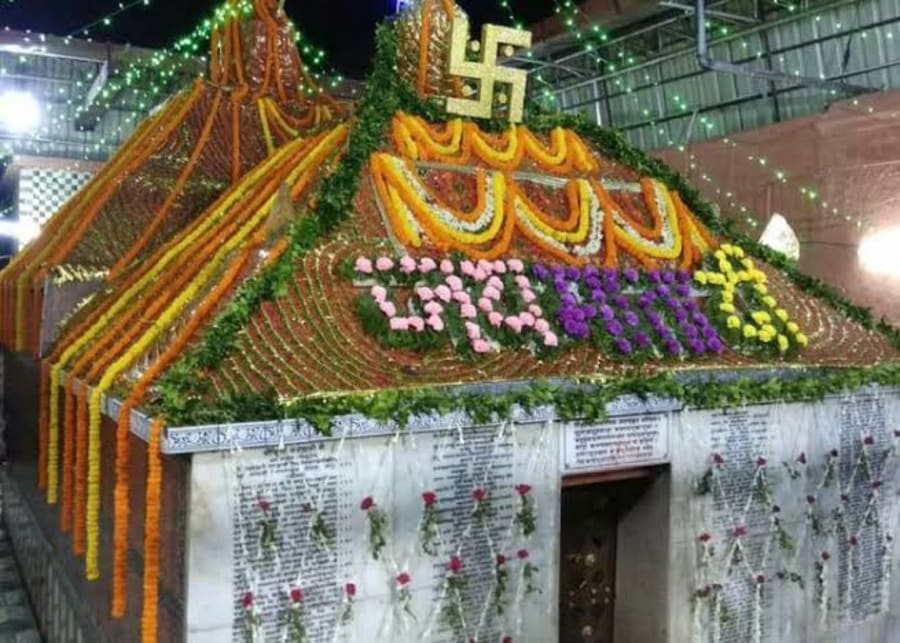
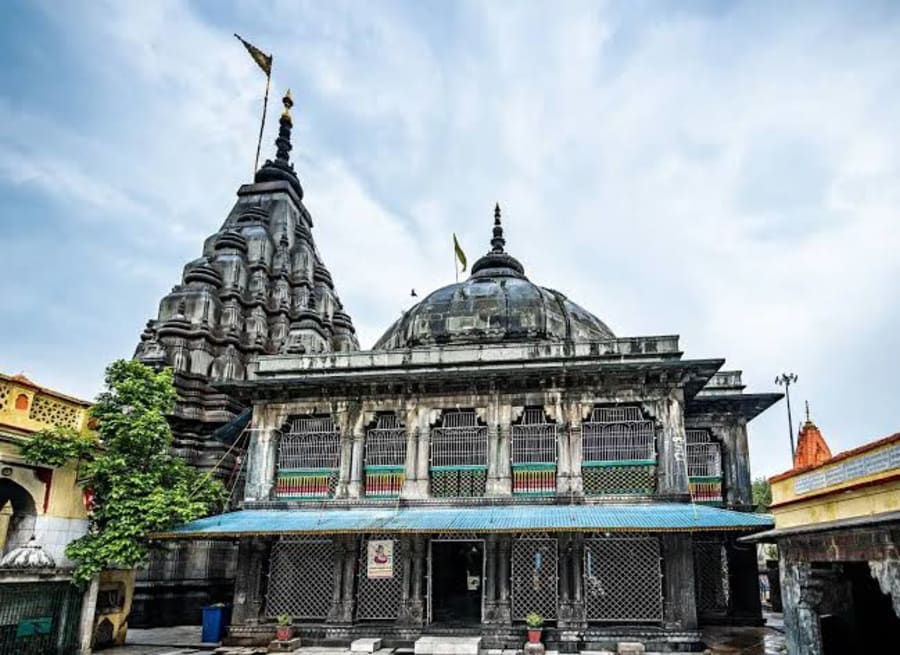
Vishnupad Mandir stands on the western bank of the Falgu in the old quarter of Gaya, and it is the temple around which the entire ritual life of the town is arranged. At its centre, inside a silver-plated octagonal basin, is a footprint impression in the rock about forty centimetres long, which tradition venerates as the charan of Bhagwan Vishnu. In the Puranic account of Gaya, the asura Gayasur obtained a boon that made his body itself sacred, and to hold him steady Vishnu is said to have placed his foot upon him at this spot — the impression left behind became the Vishnupad. The place is therefore understood not as a memorial but as the point at which the presence of Vishnu was fixed in the earth of Gaya.

The temple mentioned in the Vayu Purana and other texts is older than the structure standing today. The present building in Nagara style, with its tall shikhara rising above the courtyard, was raised in 1787 by Maharani Ahilyabai Holkar of Indore, who rebuilt many pilgrimage sites across northern India in the same period. The black stone masonry, the pillared mandap where the pandas seat families, and the surrounding smaller shrines all belong broadly to that rebuilding, though the sanctum and the footprint itself are treated as far older.

For a family arriving at Gaya, Vishnupad is where the sankalp of Gaya Shraddha is normally taken and where the central offering of pind is made after tarpan at the Falgu. The vedis of the town are traditionally counted in a sequence, and Vishnupad is the pivot of that sequence — some families complete a short circuit of three vedis in a single day, others follow the longer route over several days, but almost every route passes through this courtyard. The temple is open to Hindu pilgrims; the sanctum area is busiest through Pitru Paksha, when Gaya receives lakhs of visitors and offerings continue from before sunrise.

Why families visit

For families we accompany, Vishnupad is where the sankalp is taken and the main pind offering of Gaya Shraddha is made. Plan the darshan for early morning, carry the samagri arranged in advance, and keep the tithi of the shraddha fixed before travelling.

The principal vedi for Pind Daan at Gaya Ji and the centre of the town's ritual life.

In Gaya city itself, close to the Sansthan.
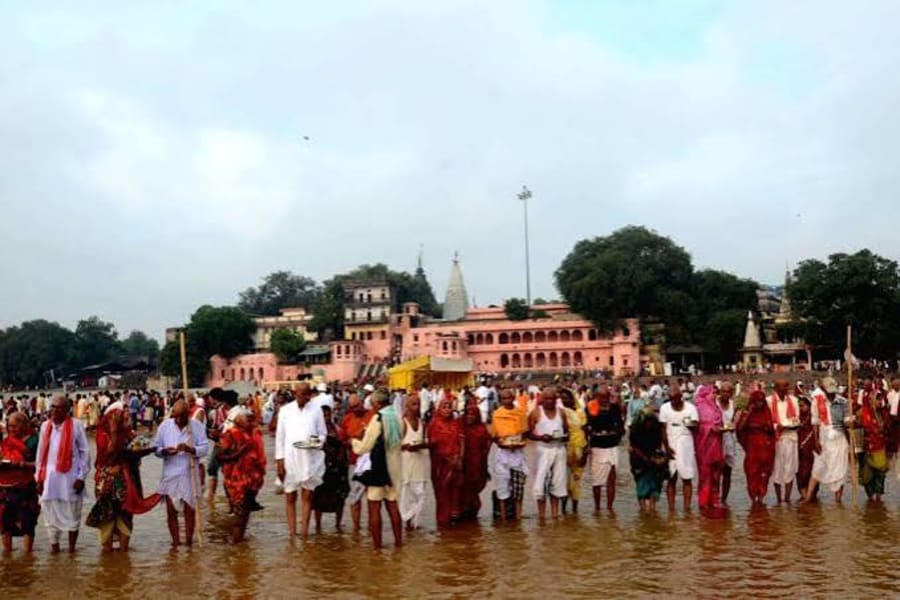
Falgu River

फल्गु नदी

Falgu River

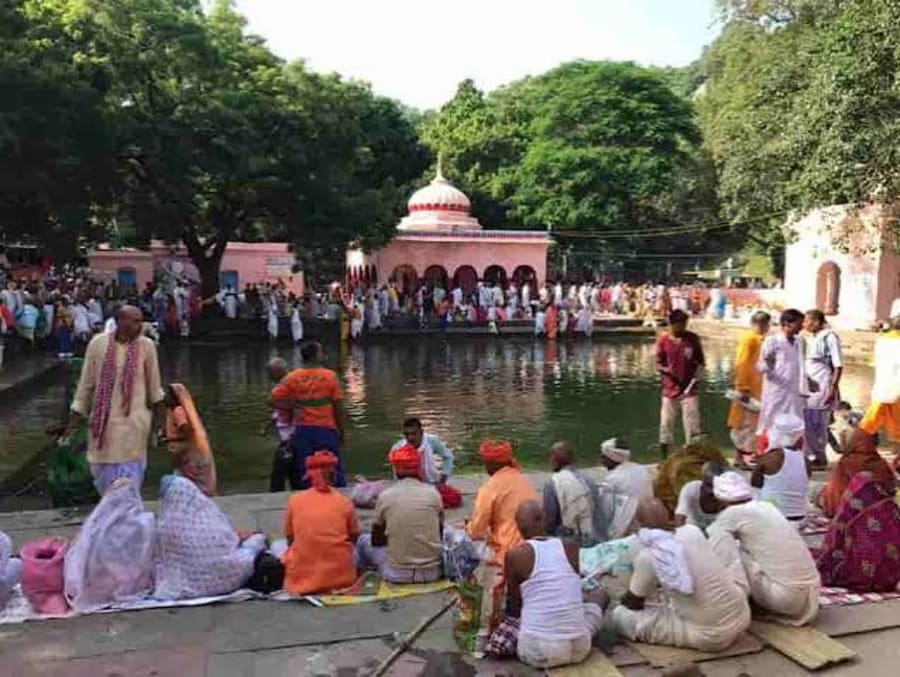
The river flowing beside Vishnupad, where tarpan is offered by families performing ancestral rites.

The Falgu — Phalgu in Sanskrit, and called Niranjana further upstream near Bodhgaya — runs along the eastern side of Gaya, past the steps of Vishnupad. For most of the year its bed is a wide expanse of sand with the water flowing beneath the surface, and this quality of a river that hides itself is the feature every tradition about it tries to explain. The best known account says that Sita ji, having offered pind here for King Dasharath, was falsely contradicted by the river when she called it to witness, and that the Falgu was told it would thereafter carry its water underground. Whatever weight a family gives the story, the practical result is the same: tarpan at Gaya is offered on the sand, into water drawn from shallow pits dug in the bed.

The river is old in the record as well as in the telling. It is named in the Puranas as one of the boundaries of the Gaya kshetra, it flows past the site where the Buddha is said to have bathed before his enlightenment at Uruvela — the modern Bodhgaya — and it appears in the accounts of Chinese travellers who came through Magadha. In recent years a rubber dam built a short distance downstream of Vishnupad has kept a stretch of water standing near the ghats through the year, so that ritual bathing and tarpan can be performed without depending on the season.

In the sequence of Gaya Shraddha the Falgu comes first. The karta bathes, performs tarpan with water, black sesame and kusha grass for the ancestors, and only then moves up to the temple for the pind offering. Families usually reach the ghats before sunrise, when the sand is cool and the ritual can be done unhurried.

Why families visit

This is where the first stage of the ritual — snan and tarpan — is performed before the pind offering. Come at dawn, carry a change of clothes, and expect to stand on open sand rather than a paved ghat.

Traditionally associated with the Gaya Shraddha rituals.

Adjacent to Vishnupad Temple, a few minutes on foot.

Mangala Gauri Temple

मंगला गौरी मंदिर

Mangala Gauri Temple

An ancient hill temple dedicated to the Goddess, counted among the Shakti Peeths.

Mangala Gauri stands on the Bhasmakuta hill in the middle of Gaya, reached by a stone stairway from the road below. It is counted among the Shakti Peeths — the places where, in the Puranic account of Sati's body being carried by Shiva and divided by Vishnu's chakra, a part is said to have fallen. At Gaya the tradition holds that the breast of Sati fell here, and the Goddess is worshipped in that nurturing aspect rather than in image form: the sanctum holds a stone symbol, not a carved figure.

The temple is referred to in the Padma Purana, the Vayu Purana and the Agni Purana, and the present shrine carries an inscription dated to 1459 CE, though the site is clearly used long before that. Around the small main sanctum are shrines to Mahishasura Mardini, Dakshina Kali, Durga and Ganesh, and older sculptural fragments are set into the walls of the compound — the kind of accumulation that marks a place continuously in worship for many centuries.

Locally the Goddess is approached as Mangala — the auspicious one — and the temple is busiest on Tuesdays and through the Mangala Gauri vrat that married women observe in the month of Shravan. Many families performing shraddha at Gaya also take darshan here, because the rites for the ancestors are traditionally begun with the blessing of the Devi of the kshetra. Our own Sansthan is a few minutes' walk from this temple, and it is the landmark we usually give visitors who are finding us for the first time.

Why families visit

Darshan of the Devi of the kshetra is traditionally taken before beginning the ancestral rites. It is also the landmark nearest to our Sansthan — the easiest point to navigate to when you arrive in Gaya.

A Shakti Peeth of great antiquity, and the landmark closest to our own location.

A few minutes from the Sansthan in Gaya.

Akshay Vat

अक्षय वट

Akshay Vat

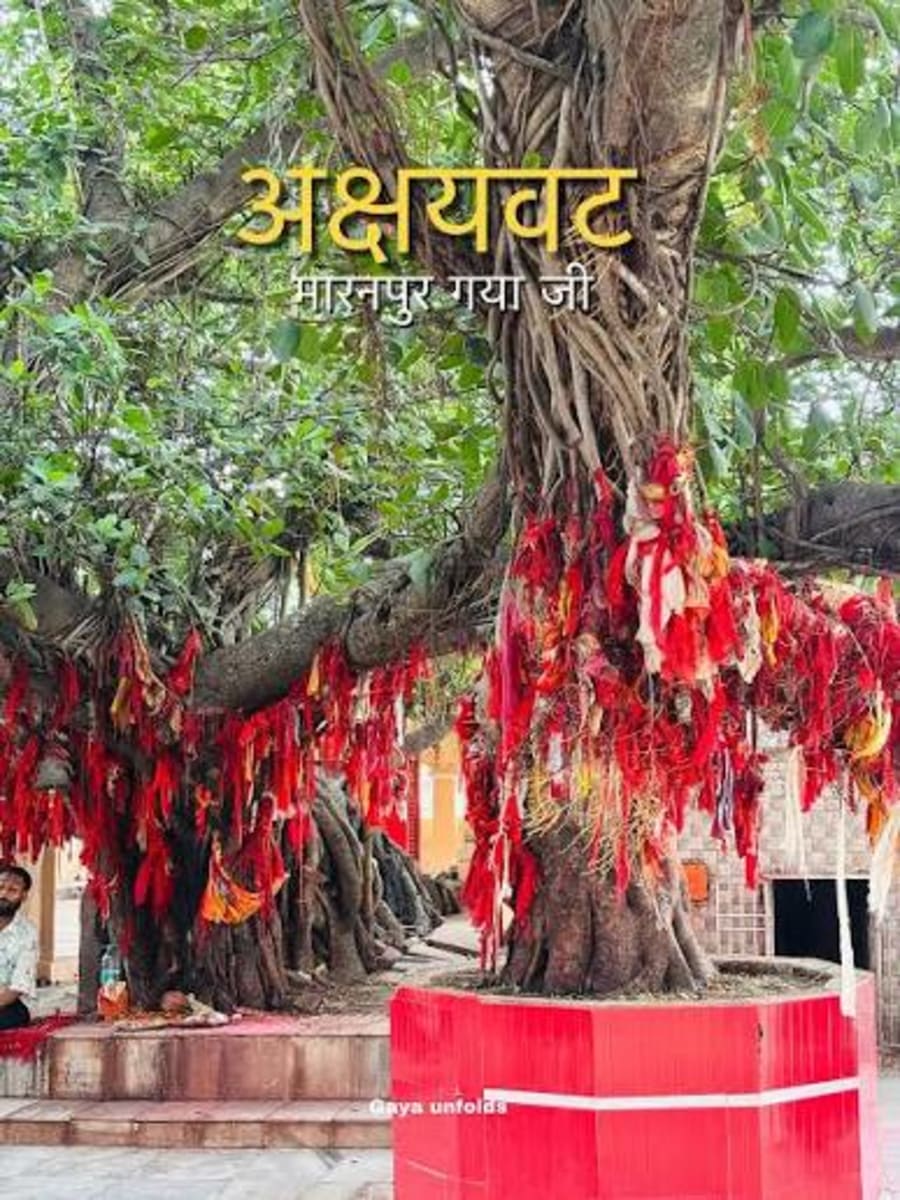
The 'immortal banyan' where the final offering of Gaya Shraddha is traditionally made.

Akshay Vat means the imperishable banyan — akshay, that which does not decay. The tree stands within a walled courtyard a short distance from Vishnupad, and in the tradition of Gaya it is the last of the vedis: the pind offered here completes the shraddha and, in the words the pandas use, is where the ancestors give the karta their ashirvad and take leave. Because of that placement, no ritual at Gaya is considered concluded until the offering under this tree has been made.

The Puranic account connects the tree to Sita ji, who is said to have blessed it as one of the witnesses that spoke truthfully when she offered pind for Dasharath at the Falgu — the same episode in which the river was cursed. Another tradition holds that the banyan survives the pralaya, the dissolution at the end of an age, which is the sense in which it is called immortal. A tree of this name is described by the Chinese pilgrim Xuanzang, who travelled through Magadha in the seventh century, and Gaya's Akshay Vat is one of a small number of such banyans venerated in India, alongside those at Prayagraj and Ujjain.

The courtyard around the tree is plain: a raised platform, the wide aerial roots, and space for families to sit while the last mantras are recited. Pilgrims tie a thread around the trunk, and the panda records the completion of the shraddha. In Pitru Paksha the queue here runs long into the evening, so families who can choose their dates are usually advised to come outside that fortnight.

Why families visit

The concluding vedi — the final pind of Gaya Shraddha is offered here and the ritual is formally completed. Keep this as the last stop of the day and allow extra time during Pitru Paksha.

Regarded as the concluding vedi of the Pind Daan sequence.

A short distance from Vishnupad Temple, in Gaya city.

Pretshila Hill

प्रेतशिला पहाड़

Pretshila Hill

A hill on the northern outskirts of Gaya with a temple at its summit, reached by a long flight of steps.

Pretshila — literally the rock of the pretas, the departed who have not yet found rest — is a bare hill about eight kilometres north of Gaya, rising sharply out of the plain. A flight of some four hundred stone steps leads to a temple at the summit built by Maharani Ahilyabai Holkar in the same period as her rebuilding of Vishnupad. At the top there is a cleft in the rock into which sattu, ground barley flour, is scattered as the offering; the belief is that this vedi serves ancestors whose death was untimely, violent or without proper rites, and who are therefore not reached by an ordinary shraddha.

At the foot of the hill lies the Brahmakund, where the karta bathes before beginning the climb, and the tarpan for this vedi is performed there. The ritual has a distinctive form: instead of the rice-and-sesame pind used elsewhere, the offering here is sattu, thrown loose into the air and into the fissure so that it settles over the rock. Families performing Tripindi or Narayan Bali often include Pretshila for exactly this reason.

The climb is exposed and there is little shade, so it is best attempted early in the morning; palanquins are available at the base for elders. The view from the summit takes in the whole of Gaya and the Falgu valley beyond, and the site is quiet outside Pitru Paksha, when it becomes one of the most heavily visited vedis in the district.

Why families visit

Included when the shraddha is for an ancestor whose death was untimely or whose rites were left incomplete. Plan an early start, carry water, and arrange a palanquin in advance if elders are travelling with you.

One of the traditional vedis where pind is offered for those who died an unnatural or unsettled death.

About 8 km north of Gaya city, then a climb of roughly 400 steps.

Sita Kund

सीता कुंड

Sita Kund

A small shrine and tank across the Falgu from Vishnupad, associated with Sita ji's offering of pind.

Sita Kund lies on the far bank of the Falgu, directly opposite Vishnupad, and it is the place the Ramayana tradition of Gaya centres on. When Ram, Lakshman and Sita came to Gaya to perform the shraddha of Dasharath, the account says the brothers had gone to arrange the samagri and were delayed; the auspicious moment was passing, and Sita ji, called by the spirit of Dasharath himself, made the offering with sand from the Falgu bed. She named the Falgu, a cow, a Brahmin, the tulsi plant and the Akshay Vat as her witnesses. When Ram returned and doubted the account, the first four are said to have denied it out of fear and were cursed, while the banyan spoke the truth and was blessed — which is why offerings at Gaya still end beneath the Akshay Vat.

The kund itself is modest: a walled tank with steps, a small shrine, and a raised platform where a footprint attributed to Sita ji is shown. It has none of the scale of Vishnupad, and most of the year it is quiet. Its importance is entirely in the story it holds, and in the practice that follows from it — that a pind of sand is valid when made with sincerity, a point the pandas make to families worried about the cost of samagri.

Families on the extended vedi circuit stop here after the Falgu tarpan, before crossing back to Vishnupad. In the dry season the crossing is made on foot over the sand; when the river is running, the road bridge is used.

Why families visit

Visited as part of the extended vedi circuit and as the site of the Ramayana account of Gaya Shraddha. A short stop, usually combined with the Falgu tarpan on the same morning.

One of the vedis of the Gaya Shraddha circuit, tied to the Ramayana tradition.

Across the Falgu river from Vishnupad, reachable on foot when the bed is dry.

Brahmayoni Hill

ब्रह्मयोनि पहाड़

Brahmayoni Hill

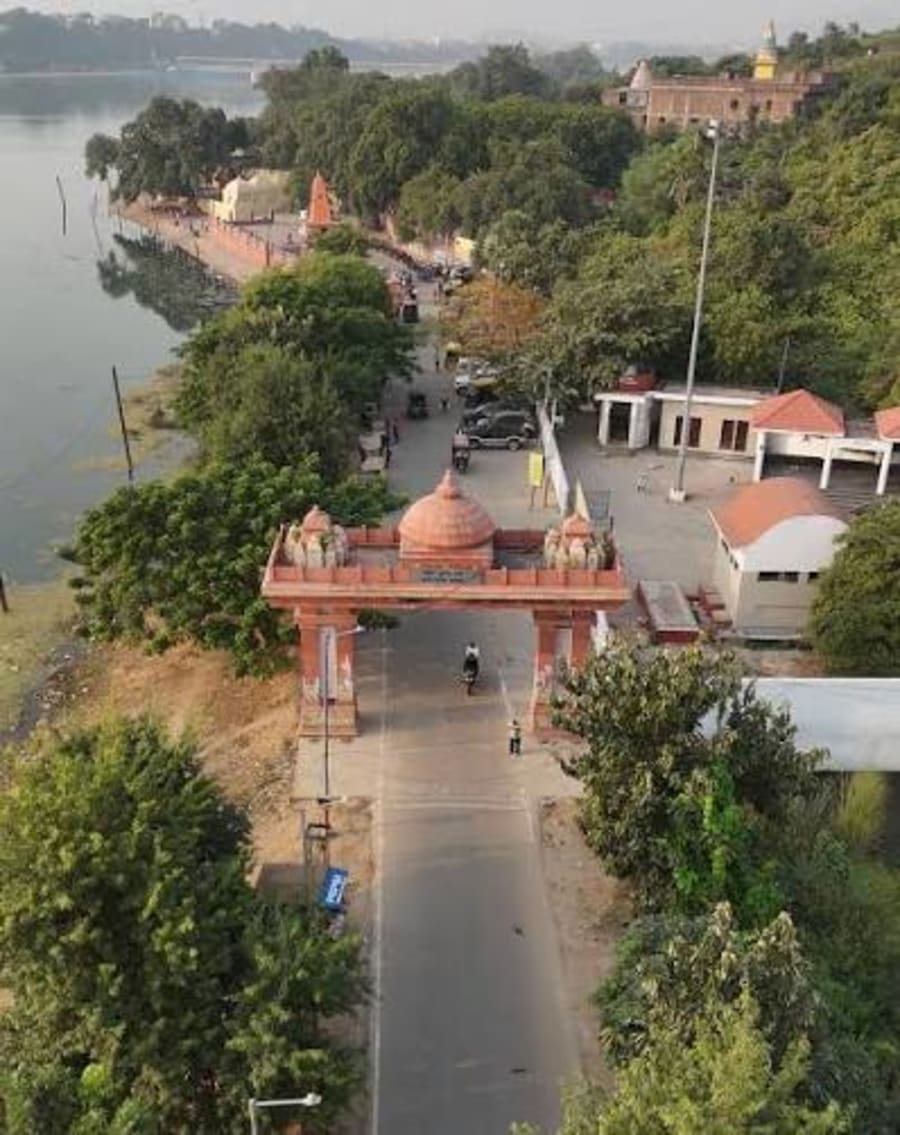
A hill south-west of Gaya with a narrow rock cleft and temples at the summit, reached by a stone stairway.

Brahmayoni rises to the south-west of Gaya, and a stairway of about four hundred and forty steps leads to the temples at its top. The hill takes its name from a narrow cleft in the rock through which pilgrims pass — the passage is understood as a symbolic rebirth, and the tradition holds that one who goes through it is released from the cycle of birth. At the summit are shrines to Brahmayoni Devi and Ashtabhuja Devi, and a broad view over the town, the Falgu and the plain beyond.

The hill is old in both the Hindu and the Buddhist record. In the Puranic account it is where Brahma performed the yajna associated with the founding of the Gaya kshetra, and the vedis of the town are traced to that sacrifice. In the Pali canon the same hill is Gayasisa, where the Buddha, shortly after his enlightenment, delivered the Adittapariyaya Sutta — the Fire Sermon — to a thousand former fire-worshipping ascetics. Rock-cut caves of the Ashokan period lie on and around the hill, and Xuanzang describes the site in his account of Magadha.

For families performing shraddha, Brahmayoni is one of the outlying vedis rather than a compulsory stop, and it is often visited in the late afternoon when the climb is easier and the view over Gaya is at its best. The steps are steep in places and there is no shade for much of the way.

Why families visit

An optional stop on the extended circuit, and the best vantage point over Gaya and the Falgu. Go late afternoon; the climb is steep and largely unshaded.

An ancient site of the Gaya kshetra and, in Buddhist tradition, the Gayasisa where the Fire Sermon was given.

About 2 km from Gaya city, then a climb of roughly 440 steps.

Mahabodhi Temple, Bodhgaya

महाबोधि मंदिर, बोधगया

Mahabodhi Temple, Bodhgaya

The great temple complex marking the place of the Buddha's enlightenment, a UNESCO World Heritage Site.

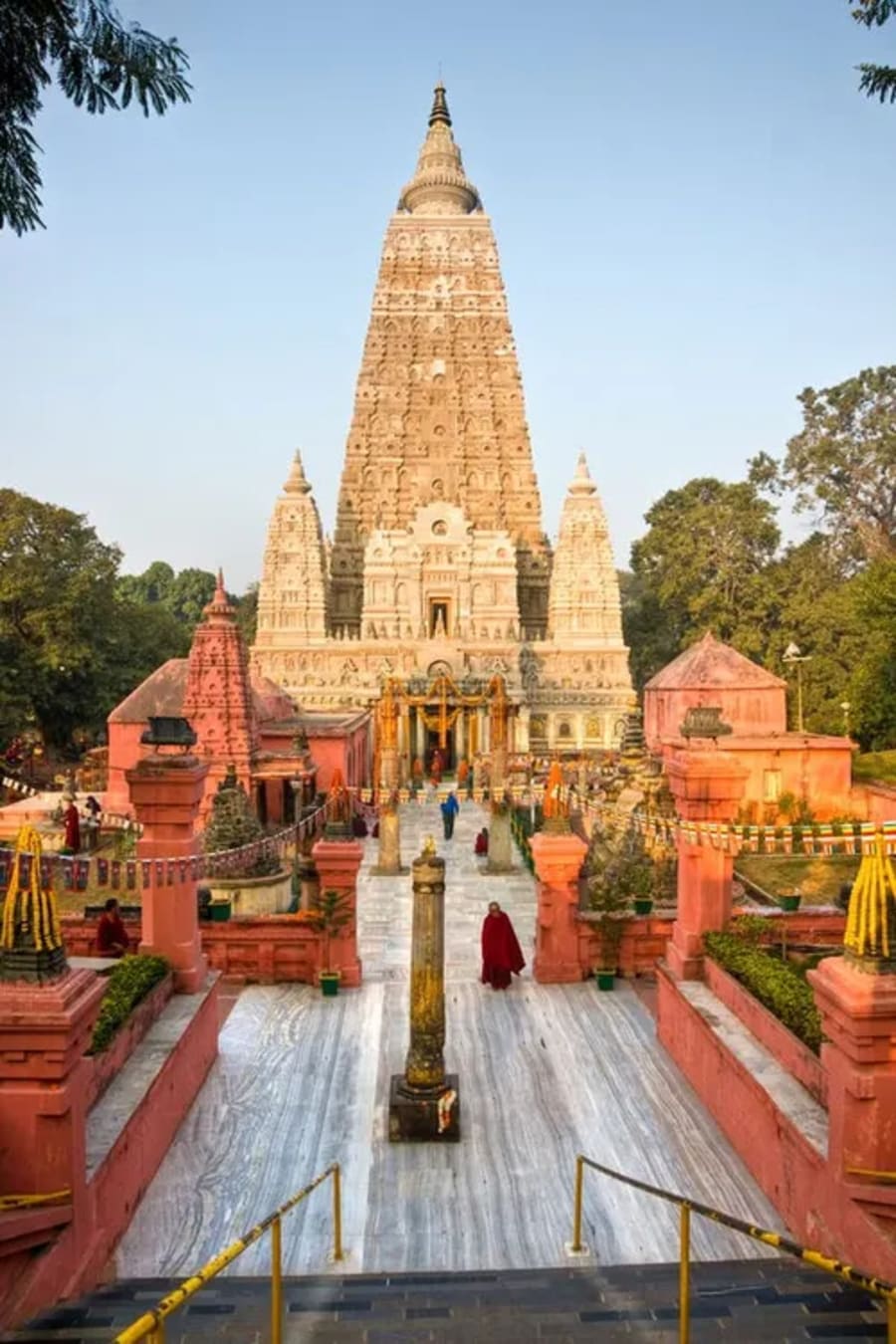
Mahabodhi stands at Bodhgaya, on the bank of the Niranjana — the upper course of the same Falgu that flows past Vishnupad. It marks the spot where Siddhartha Gautama, seated beneath a pipal tree, is said to have attained enlightenment in the sixth or fifth century BCE. The first structure on the site was raised by the emperor Ashoka in the third century BCE, and the diamond throne he placed beside the tree — the Vajrasana, a polished sandstone slab — still lies between the temple and the Bodhi tree.

The brick temple standing today, with its straight-sided pyramidal tower rising about fifty-five metres above a square plinth, belongs largely to the Gupta period, roughly the fifth to sixth century CE, making it one of the earliest surviving brick temples in India. It was extensively restored in the nineteenth century under Alexander Cunningham and J. D. Beglar, working from a small stone model of the temple that had been found on the site. Around the main shrine are the seven sacred spots where the Buddha is said to have spent the weeks following his enlightenment, including the Animeshlochan chaitya and the Ratnachankramana, the jewelled walk.

The complex was inscribed as a UNESCO World Heritage Site in 2002. It is in daily use by monastic communities from Sri Lanka, Thailand, Myanmar, Tibet, Japan and elsewhere, and the surrounding town holds monasteries built in each of those national styles. Entry is free; cameras and phones are subject to a separate counter, and footwear is left outside.

Why families visit

Most families performing rites at Gaya also make the short trip to Bodhgaya. Allow two to three hours, leave footwear and phones at the counters, and combine it with the Bodhi tree in the same visit.

One of the four principal pilgrimage sites of the Buddhist world.

About 13 km from Gaya, roughly 30 minutes by road.

Bodhi Tree, Bodhgaya

बोधि वृक्ष, बोधगया

Bodhi Tree, Bodhgaya

The sacred pipal within the Mahabodhi complex, descended from the tree under which the Buddha was enlightened.

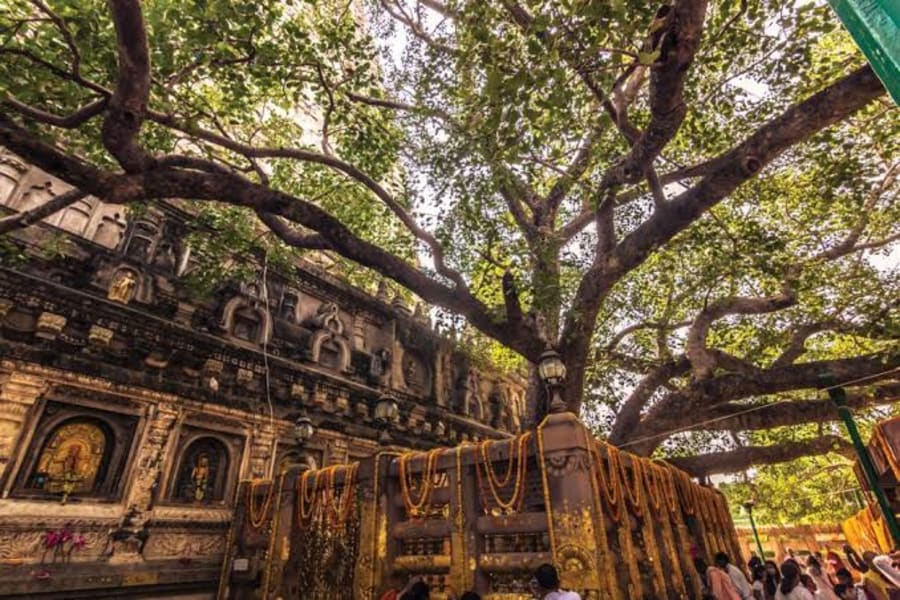
The Bodhi tree stands directly behind the Mahabodhi Temple, on the western side, with the Vajrasana between the trunk and the shrine wall. It is a pipal — Ficus religiosa — and the tree living there now is not the original but a descendant of it, the line having been replanted several times over more than two thousand years. The most important link in that chain is the sapling that Sanghamitta, daughter of Ashoka, carried to Anuradhapura in Sri Lanka in the third century BCE; the tree grown from it survives there, and cuttings from the Sri Lankan tree were later brought back to Bodhgaya when the original had died.

Ashoka's own attachment to the tree is recorded in the early texts, as is his queen Tissarakkha's attempt to have it destroyed. It was cut down or damaged more than once in later centuries and each time regrown or replanted from a descendant. The present tree was planted in 1881 during Cunningham's restoration of the complex, after the previous one fell in a storm.

The stone railing around the tree includes sections of Shunga-period sandstone carving from the second or first century BCE, some of the oldest sculpture on the site. Pilgrims circumambulate the tree, sit in meditation on the platform, and collect fallen leaves, which are treated as relics; monks from the resident traditions chant here through the day and well into the evening.

Why families visit

The quietest part of the Mahabodhi complex and worth sitting at rather than passing through. Visit early morning or after sunset, when the chanting is on and the crowds are lighter.

Among the most venerated trees in the world, and the focus of the Mahabodhi complex.

Immediately behind the Mahabodhi Temple, Bodhgaya.

Speak with Pandit Ji

पं0 सुबोध पाठक (शास्त्री जी)

For guidance on a ritual, a Janampatrika reading, or planning your visit to Gaya Ji, call or send a message on WhatsApp. You will be advised honestly about what is needed.

Or fill the booking form

Call WhatsApp